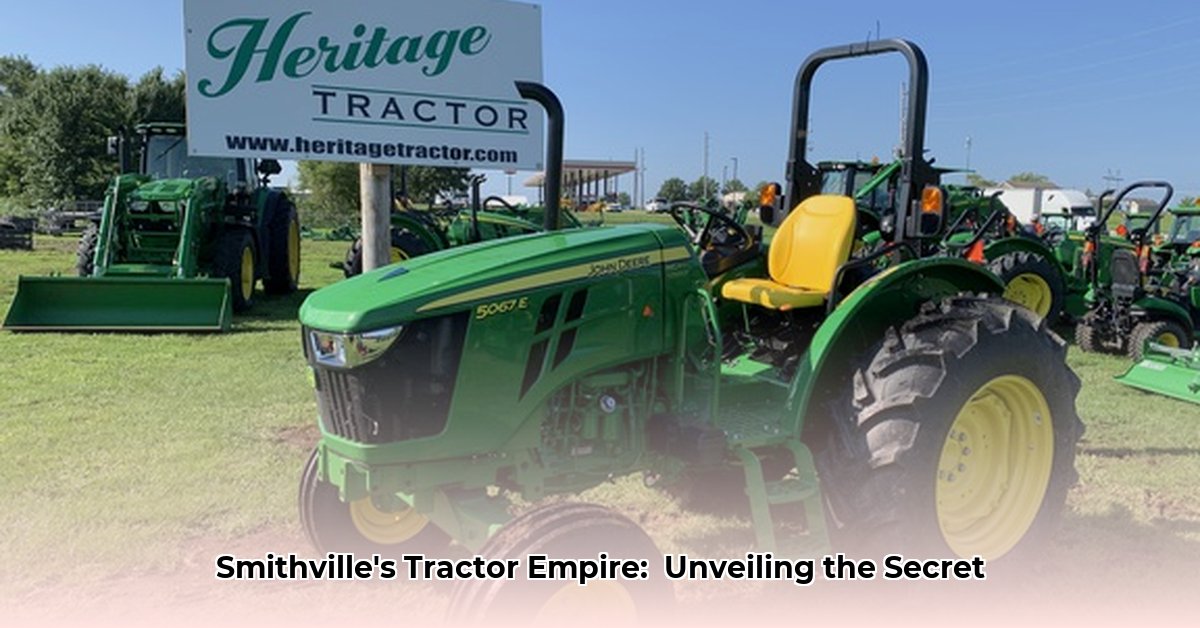
Heritage Tractor's recent expansion into Smithville, Missouri, marks a significant strategic move, adding to their 22 dealerships across the Kansas City metro area. This aggressive growth strategy, coupled with enticing sales promotions, signals a strong belief in the region's agricultural and lawn care markets. However, this ambitious undertaking presents both substantial opportunities and considerable risks. This analysis examines the details of Heritage Tractor's expansion, sales approach, and the competitive landscape, offering insights into the potential implications for the company, local businesses, and the broader economy. For more information on another Heritage Tractor location, visit their Rolla, MO site: Heritage Tractor Rolla.
Smithville Expansion: A Concentrated Growth Strategy
Heritage Tractor's Smithville location forms part of a larger, concentrated expansion within the Kansas City metro area. This targeted approach suggests confidence in the region's economic potential and a focus on capturing a significant market share. While precise figures regarding the Smithville location's size and employee count remain unavailable, the overall investment underscores the company's commitment to its growth strategy. This concentrated expansion minimizes geographical dispersion, allowing for more efficient resource allocation and potentially stronger brand recognition within a defined area.
Sales Promotions: A Multi-Pronged Approach
To drive sales and attract customers, Heritage Tractor employs a multi-faceted sales strategy. Significant discounts are being offered across various product categories and services:
- Landscaping Services: Up to 33% off HeritageGard landscaping services.
- Agricultural Filters: A 15% discount on agricultural filters.
- Oil Changes: 10% off oil changes.
- Used Equipment: A "Hot List" of used equipment deals offering substantial price reductions.
This diverse range of incentives is designed to appeal to a broad customer base, including individual farmers and landscaping businesses. The effectiveness of this promotional strategy will be a key factor in determining the success of the expansion. Does this diverse discount strategy effectively target each market segment?
Risk Assessment: Balancing Growth with Sustainability
Heritage Tractor's expansion carries inherent risks. The company’s success hinges on effectively managing these challenges while capitalizing on existing opportunities. A key component of this is maintaining operational efficiency and customer satisfaction amidst rapid growth.
| Risk Factor | Likelihood | Impact | Mitigation Strategy |
|---|---|---|---|
| Unsuccessful Expansion | Medium | High | Thorough market analysis; phased expansion rollout; flexible business plan |
| Ineffective Promotions | Medium | Medium | A/B testing of marketing campaigns; data-driven optimization; targeted advertising |
| Increased Competition | High | High | Differentiate services; provide exceptional customer service; build customer loyalty programs |
| Economic Downturn | Low | High | Diversify income sources; implement cost-control measures; maintain strong financial reserves |
| Supply Chain Disruptions | Medium | Medium | Secure multiple suppliers; implement strategic inventory management; establish long-term supplier contracts |
Addressing these potential risks through proactive mitigation strategies will be crucial for sustaining long-term profitability.
Stakeholder Perspectives: A Multifaceted View
The expansion's impact extends beyond Heritage Tractor itself. Local farmers and lawn care businesses stand to benefit from increased accessibility to equipment and services, fostering potential competition and improved pricing. However, investors are closely monitoring Heritage Tractor's performance, evaluating the ROI of this ambitious growth strategy. The company faces the challenge of balancing aggressive expansion with a commitment to sustained profitability and customer satisfaction. Will this aggressive expansion translate into long-term success, or will it prove unsustainable given the increased market competition?
Competitive Landscape: A Dynamic Market
While precise competitive data is limited, the scale of Heritage Tractor's expansion suggests a dynamic and competitive market. Success hinges on their ability to differentiate themselves through superior customer service, effective pricing strategies, and brand recognition. Understanding the strategies of competitors will be essential for sustained growth and market share capture.
Conclusion: A High-Stakes Gamble
Heritage Tractor's expansion into Smithville represents a calculated risk with the potential for significant rewards. The success of this strategy depends on several key factors including the effectiveness of its sales promotions, efficient management of potential risks, and the ability to navigate a competitive market. Sustained economic growth in the region, strong customer relationships, and a well-executed business plan are all crucial elements for long-term success. The future of Heritage Tractor's Smithville location, and its larger expansion initiative, will be a compelling case study in strategic growth within a dynamic market.